Will ISO 45010 Be Legally Binding in the US? Not automatically. ISO standards are voluntary international guidelines, not US federal statutes or regulations. ISO 45010 will not create new legal mandates in the United States upon publication. However, voluntary does not mean without consequence.
Status Note — Global Tracking Frame; ISO 45010 Executive Audit
Executive Update (June 6, 2026): The International Organization for Standardization’s Draft International Standard (ISO/DIS 45010:2025) has cleared its initial ballot lifecycle and is tracking toward full international publication. As a direct global evolution of the British Standard BS 30416, ISO 45010 permanently shifts corporate menopause management out of informal wellness perks and directly into systematic Occupational Health and Safety (OHS) governance. Senior HR executives and corporate risk officers should read this guide as an active alignment roadmap ahead of imminent board-level disclosure expectations.
ISO 45010: HR Guide to New Menopause Workplace Standards
Menopause is entering the domain of formal occupational health governance. ISO 45010 is the first international standard designed to provide structured guidance on menopause and menstrual health in the workplace. Currently in development and moving toward publication, this standard represents a critical preparation window for US HR leaders, one that is shorter than many realize. This article provides the essential roadmap: what the standard is, its development status, and the specific requirements organizations must prepare for.
What Is ISO 45010?
ISO 45010 is an occupational health and safety (OHS) management standard being developed by the International Organization for Standardization. Its official full title is: Occupational health and safety management – Menstruation, menstrual health and menopause in the workplace – Guidance.
It is designed to integrate seamlessly into existing enterprise safety and risk management systems, particularly ISO 45001, which governs broader occupational health and safety systems.
One framing distinction worth noting: ISO 45010 explicitly classifies menstruation and menopause not as medical conditions but as natural life course experiences. That distinction shapes how the standard expects organizations to respond. It moves the issue out of the reactive medical accommodation framework and into the proactive domain of operational design and governance.
For HR, this means menopause will increasingly be evaluated as:
- A core workforce health and safety baseline consideration.
- A systems-level, structural organizational responsibility.
- A documented management topic subject to fiduciary and governance oversight.
- A risk management issue with measurable corporate capacity and retention implications.
This shifts menopause from informal manager discretion into formal organizational architecture. That is a meaningful change in how enterprise operations must be evaluated.
Where Did It Come From?
ISO 45010 builds directly on BS 30416, the landmark corporate guideline on workplace menopause published by the British Standards Institution (BSI). BS 30416 provided voluntary employer guidance on physical workplace adjustments, line manager training, environmental metrics, and policy alignment.
The transition from a national UK guideline to an international ISO standard is highly significant. It signals that menopause at work is no longer viewed as a regional or culture-specific trend. It is being formalized at the global governance level.
For context, institutional standards often follow this path: a leading national standards body develops guidance, enterprise operations adopt it voluntarily, and the international standards community formalizes it into a global framework. That is exactly what is happening here.
Where Is ISO 45010 Right Now?
International ISO standards move through a highly structured development lifecycle:
- Proposal and new work item
- Working draft
- Committee draft
- Draft International Standard (DIS)
- Final Draft International Standard (FDIS)
- Official Publication
ISO 45010 is currently sitting within the Draft International Standard (DIS) stage. With international ballot reviews maturing, full publication is tracking to establish a global benchmark. This creates a remarkably short runway for North American organizations that have not yet initiated an internal tracking and assessment strategy.
Multinational organizations typically begin aligning internal policies during the DIS stage rather than waiting for final publication. Early alignment means designing proactively rather than retrofitting existing practices under external compliance or litigation pressure.
Corporate Governance: The Voluntary Framework Enforcement
Will ISO 45010 Be Legally Binding in the US? Not automatically. ISO standards are voluntary international guidelines, not US federal statutes or regulations. ISO 45010 will not create new legal mandates in the United States upon publication. However, voluntary does not mean without consequence.
ISO standards carry significant operational weight across several critical enterprise performance areas:
ESG Reporting: Human capital management disclosure expectations are expanding rapidly under global reporting frameworks. Institutional investors, proxy advisors, and ESG rating agencies increasingly reference ISO alignment when evaluating whether an enterprise is managing workforce-level asset risk adequately.
Board Governance: Corporate boards tasked with human capital committee responsibilities are asking increasingly specific questions about talent retention frameworks and occupational health governance. ISO 45010 will quickly become the baseline reference point in those boardroom conversations.
Global Operations: For organizations operating across international boundaries where menopause workplace standards are gaining hard regulatory traction—such as the UK and parts of the European Union—ISO 45010 alignment supports critical policy consistency across global HR branches.
Legal Positioning: Organizations that document proactive occupational health governance typically carry significantly lower legal exposure when accommodation or sex-and-age discrimination claims arise. ISO alignment fundamentally strengthens that documented defensive posture.
What Will ISO 45010 Explicitly Address?
Based on the predecessor standard BS 30416 and the current international draft parameters, ISO 45010 provides clear guidance across several operational pillars:
Workplace Environment: Concrete adjustments to micro-climate temperature control, ventilation access, physical rest facility proximity, and uniform or dress-code material flexibility.
Manager Awareness and Training: Structured education for line managers on menopause and perimenopause experiences, with heavy emphasis on recognizing performance-adjacent impacts without demanding or forcing an employee’s medical disclosure.
Policy Alignment: Full integration of menopause considerations into existing occupational health, corporate safety, and workplace design policy frameworks, completely avoiding the vulnerability of disjointed “wellness” silos.
Risk Assessment: Formally including menopause as a factor in occupational health risk evaluations, particularly for high-judgment executive, physical, or technical roles with sustained cognitive demands.
Disclosure and Privacy: Strict guidance on how organizations handle internal data. This includes structural protections against inadvertent disclosure and absolute clarity on what employees are and are not required to share to access operational support.
Intersectional and Inclusive Approaches: Formal recognition that menopause experiences vary significantly across racial and individual lines. The standard emphasizes an intersectional lens, factoring in demographic variations such as the earlier symptom onset patterns historically experienced by Black women and women of color.
What ISO 45010 Will Not Do
It is worth being clear about the boundaries of this standard. ISO 45010 will not:
- Create automatic legislative obligations in the US upon publication.
- Replace or override existing ADA accommodation frameworks.
- Prescribe a generic, single policy template that works across all distinct corporate sectors.
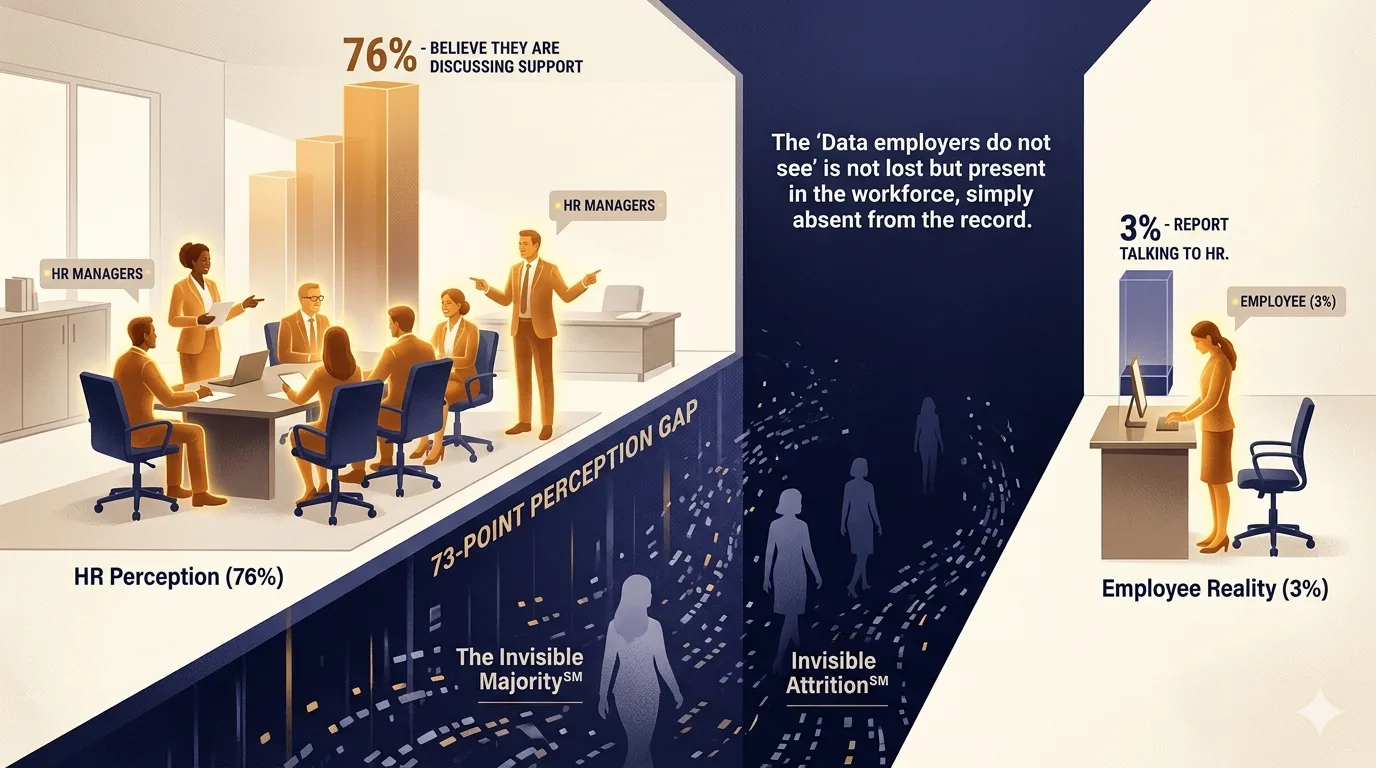
- Automatically eliminate the institutional disclosure barriers that feed Invisible Attrition.
The standard provides an overarching governance framework and strategic guidance principles. Execution will require organizations to assess their specific context, workforce demographic baselines, and existing information systems.
What HR Leaders Can Do Before Publication
The current tracking runway is the exact time to begin an internal assessment. Preparation does not require public announcements or sweeping policy changes. It requires clear insight into organizational gaps:
- Review Your Existing Occupational Health Governance: Does your current policy ecosystem include any structural reference to menopause or perimenopause? Most US organizations will find the answer is a absolute blank slate. That is useful information for scoping what will need to be built.
- Assess Manager Training Frameworks: Do your supervisors possess a structured model for recognizing performance-adjacent impacts on employees navigating health transitions? Do they have an institutional referral pathway that does not force the employee to break professional silence?
- Evaluate Your Accommodation Documentation Practices: How menopause-related support is currently captured matters deeply for corporate risk management. If accessing simple environmental adjustments requires formal medical documentation, that represents a measurement gap worth examining now.
- Get Ahead of the ESG and Board Conversation: If your organization reports on human capital tracking or talent asset preservation, begin evaluating how menopause governance will be documented and disclosed. ISO 45010 will become the direct language institutional investors use when auditing your occupational health frameworks.
Why the Timeline Matters
With international frameworks formalizing, organizations have a clear, finite window to execute internal gap assessments before this standard becomes an active scorecard in executive governance conversations.
The enterprises that will be best positioned are those that treat this tracking phase as a signal to build, not a reason to wait. Proactive attention allows for intentional structure. It allows HR and risk leadership to guide the conversation with boards, legal counsels, and financial stakeholders rather than reacting to their questions after a crisis occurs.
The macro signal ISO 45010 sends is clear: menopause is not a private, personal issue that organizations can safely remain unstructured about. It carries workforce capacity, enterprise governance, and balance-sheet risk implications that belong entirely inside formal corporate systems.
To track how these global standards align with unfolding state-by-state legislative pressures across the United States, see our live analysis: The National Menopause Legislation Tracker.
Board AI Market Intelligence
Organizations assessing how emerging standards may affect workforce governance, measurement, and executive oversight can use Lozen Advisory’s Board AI Market Intelligence service to translate external signals into decision-ready analysis.