AI systems are accelerating output, transactions, discovery, and decision support. All of this activity in Enterprise AI does not eliminate human labor. It relocates the work into verification, correction, exception handling, source validation, and liability review.
Enterprise AI rarely eliminates work as cleanly as the business case suggests. It relocates that work into verification, quality assurance, exception handling, audit, and the continuous human judgment required to make automated output usable.
AI relocates human labor. Vendors call it autonomous.
If you want to evaluate different options, it helps to know a few details:
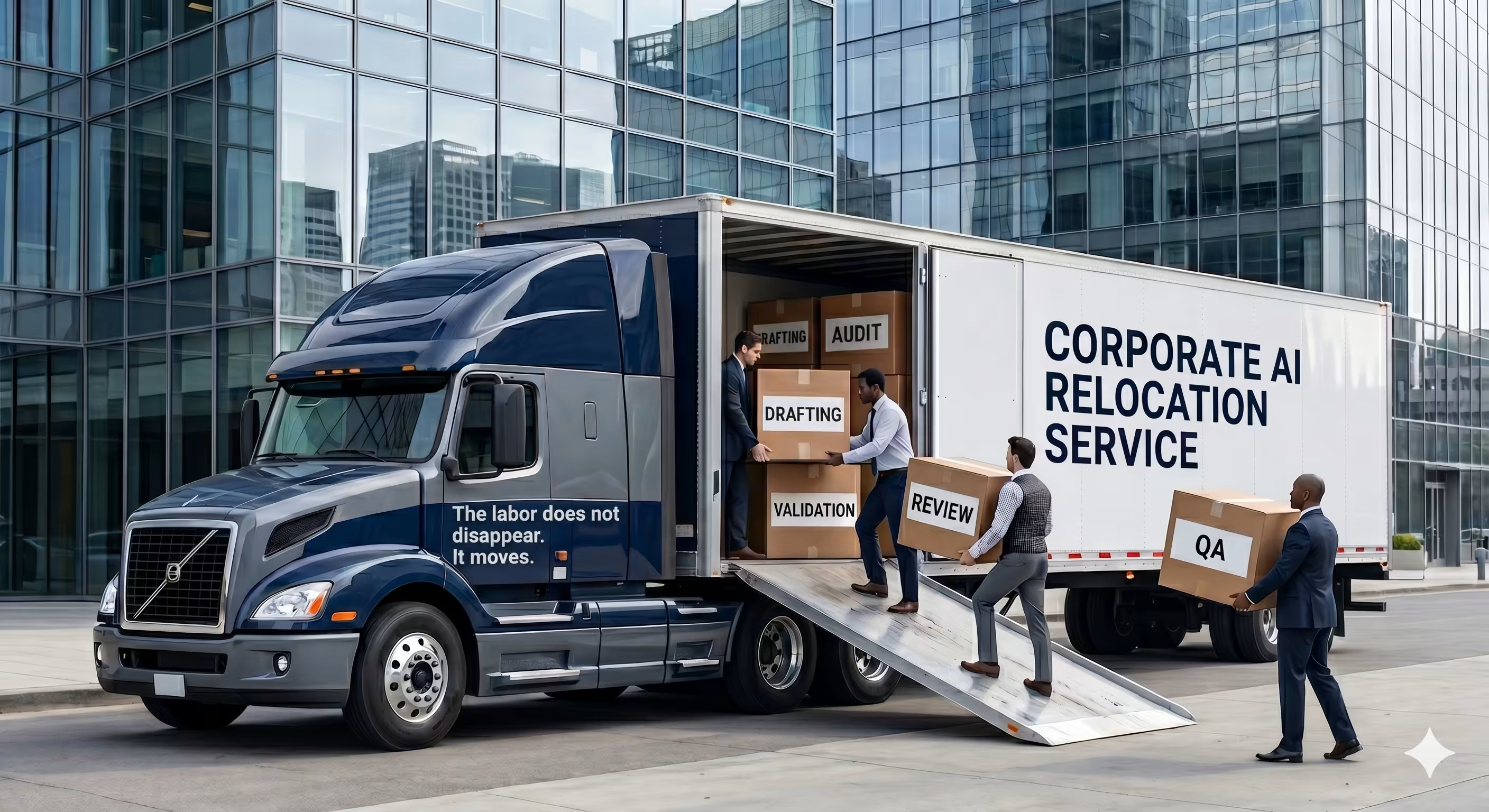
- The labor does not disappear.
- It moves.
- It moves from drafting to verification.
- From production to correction.
- From search to source validation.
- From workflow execution to exception handling.
- From decision support to liability review.
- From “doing the work” to proving the machine did not break the work.
This is the part the automation story prefers not to tell.
Lozen Advisory can help you identify where the work went.
The vendor pitch depends on treating human judgment as residual, occasional, or supervisory. In practice, human beings remain the load-bearing infrastructure that makes AI usable, safe, defensible, and institutionally acceptable.
It has been relocated into the people responsible for checking, correcting, escalating, contextualizing, validating, and owning the output.
That is not autonomy.
That is labor displacement inside the workflow.
Lozen Advisory’s AI Workforce Materiality Briefing identifies where enterprise AI relocates verification, correction, escalation, and ownership labor into employees without measuring the resulting capacity risk.