A September 2026 survey reveals that 52% of CIOs are held accountable for AI agent errors despite lacking direct operational control, exposing a critical governance gap between responsibility and authority.
In survey released on Sep 08, 2026, 2,501 CIOs and CTOs across five countries, 52% said the CIO is accountable when an AI agent makes an error. Customer service leadership came in at 16%. Legal and compliance: 6%. 8x8 titled that finding well, they said, “The CIO Is Holding the Bag.”
The more important finding is why.
Accountability has landed on the CIO without necessarily bringing the authority, control, or evidence required to exercise it. That is not governance. It is an accountability gap.
The Growing Divide Between AI Authority and Accountability
I’ve been circling this problem for a few months now — first with The Name Standard℠ (a name on a decision only means something if that person had the authority, information, and time to actually exercise judgment), then with the Board Ownership Problem (RACI charts and approval workflows break down once AI is drafting, ranking, and acting inside workflows, not just supporting them).
The 8x8 data sharpens that argument into a specific case: a CIO can be responsible for an AI failure without having selected the vendor, approved the business process it was deployed into, or controlled the permissions and workflows surrounding it. Responsibility, authority, control, and evidence are four different questions — and increasingly, they point to four different people. Most governance structures still collapse all four into one box labeled “owner.” That worked when the object being governed was conventional software. It doesn’t hold up when AI systems operate across applications, use tools, and participate materially in decisions.
Why Audit Trails Alone Can’t Solve AI Governance
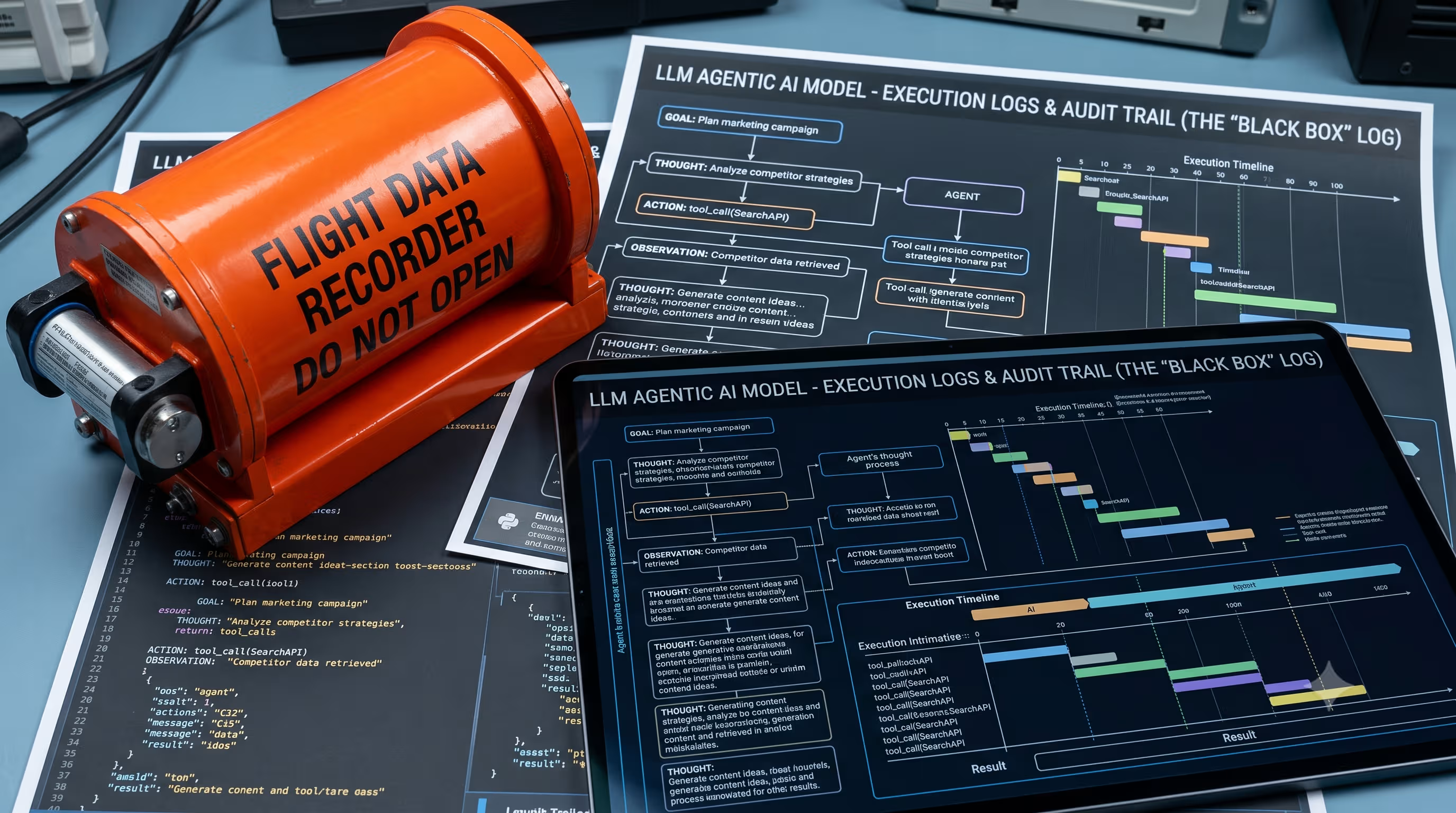
8x8 also flags the audit trail as part of the fix, and it’s right that one is necessary — if the CIO is expected to answer for what an AI system did, the organization has to preserve evidence sufficient to investigate it.
But a log only proves that something happened. It doesn’t establish who authorized the system to operate under those conditions, who approved its permissions, who was supposed to be monitoring it, or who accepted the risk. That gap is why I defined Evidence-Based Responsibility Reconstruction℠: when AI-mediated conduct becomes consequential, responsibility can’t be read off the org chart or handed to whoever owns the tech stack. It has to be reconstructed from whatever record actually connects people to the decisions that shaped the system’s conduct.
Moving Beyond Default CIO Accountability for AI Failures
The real risk in the 8x8 numbers isn’t CIO workload — it’s the shortcut they reveal: AI touches technology, therefore technology owns the failure. But owning the technology isn’t the same as being responsible for every permission, deployment decision, and business use surrounding it. That responsibility may land on the CIO. It may just as easily land on the business unit, procurement, legal, risk, another executive, or several of them at once.
The goal isn’t to protect the CIO from accountability. It’s to make accountability provable rather than convenient — because “the CIO owns it” isn’t a reconstruction of what happened. It’s just where the organization decided to leave the bag.